HEMA-free is not the same as hypoallergenic
HEMA-free has quietly become shorthand for safe, and it is doing more work than it can carry. It is genuinely useful information about a product. It is not a promise that nobody will react to it.
This matters for you at least as much as for your clients, because occupational sensitisation is a career-ending problem and it builds silently for years. So it is worth being precise about what the label means, what the law actually says, and where the real risk sits.
What HEMA is
HEMA is 2-hydroxyethyl methacrylate, a small, low-viscosity monomer used widely across gel systems. It is popular because it works: it thins a formula, it wets the nail plate well, and it helps adhesion. It is also a well-documented skin sensitiser, which is the entire reason this conversation exists.
Is HEMA banned? No. It is restricted.
This is the most common factual error in nail content, and suppliers repeat it in their own headlines. In the EU, HEMA and di-HEMA trimethylhexyl dicarbamate were added to Annex III of the Cosmetics Regulation by Commission Regulation (EU) 2020/1682. Annex III is the restricted list, not the prohibited list. The conditions are:
- Nail products, professional use only. That is the entry itself, and anything outside it is non-compliant by default, which is what pulled HEMA out of consumer retail kits.
- Two mandatory warnings on the pack: for professional use only, and can cause an allergic reaction.
- No maximum concentration limit. The restriction controls who uses the product, not how much HEMA is in it.
The deadlines passed years ago: non-compliant products could not be placed on the EU market from 3 June 2021, or made available on it from 3 September 2021. If you are working professionally, HEMA-containing product is legal for you to use. The restriction was never aimed at you. It was aimed at consumers applying it to themselves with no training.
TPO is a completely separate story
TPO, diphenyl(2,4,6-trimethylbenzoyl)phosphine oxide, is a photoinitiator rather than a monomer, and it has nothing to do with allergy. It was reclassified as a CMR category 1B substance for reproductive toxicity, which under the Cosmetics Regulation triggers automatic prohibition. Commission Regulation (EU) 2025/877 deleted the Annex III entry that had permitted it at up to 5% in professional nail products, and moved it into Annex II. It has been prohibited in the EU since 1 September 2025, with no transitional period and no sell-through. Existing stock had to be withdrawn, and salon back-bar use counts as making available on the market.
Great Britain diverges here. TPO is prohibited there from 15 August 2026 with a sell-through period running to 14 February 2027, while Northern Ireland follows the EU timetable. None of this makes HEMA banned, and none of it means gel polish was banned, whatever a viral post told your clients. Two different substances, two different reasons, two different sets of rules.
Why HEMA-free is not hypoallergenic
Removing HEMA removes one allergen. It does not remove the category.
- HEMA is not the only sensitiser in these systems. Patch testing across UK and Ireland dermatology units found reactions to a range of methacrylates and acrylates, with hydroxypropyl methacrylate and ethyl acrylate both well represented alongside HEMA. HPMA is a common HEMA substitute.
- Cross-reactivity is real. Once someone is sensitised to one acrylate, structurally related ones can trigger them too, so an ingredient swap is not a clean slate.
- Di-HEMA trimethylhexyl dicarbamate is a separate ingredient with its own EU restriction, and a product can be HEMA-free while containing it.
HEMA-free is a risk reduction for someone with a confirmed HEMA sensitivity. It is not a hypoallergenic claim, and any brand selling it as allergy-safe is overreaching.
The real driver is uncured product on skin
This is the part that gets skipped. Fully cured, polymerised gel sitting on the nail plate is not what sensitises people. Reactive monomer in contact with skin is. The EU's own scientific assessment concluded that these substances are not likely to pose a sensitisation risk provided their use is restricted to the nail plate and contact with the surrounding skin is avoided. Which puts the ingredient list second. Your application is first.
How the allergy actually develops
It is a delayed hypersensitivity, not an immediate one. Small reactive monomers penetrate skin and bind to skin proteins, and the immune system learns to recognise the result. Sensitisation is silent and cumulative, so you can work with a product for years with no symptoms at all while the exposure quietly adds up. Then one day a tiny exposure triggers a reaction, and it feels sudden even though it was not.
The reaction typically appears 24 to 72 hours after exposure, which is precisely why people blame the wrong thing. And once sensitised, it is permanent. It also extends to structurally related materials well outside the salon, including dental composites and some medical adhesives, which is why this is worth taking seriously long before it becomes a problem.
What to watch for
On yourself, look at the fingertips and the sides of the fingers first, but do not stop there. Transfer sites matter as much as contact sites.
- Dry, cracked, itchy or blistered skin around the fingertips and nail folds, often worse on the hand that holds the brush.
- A rash on the eyelids, face or neck, from touching your face during the working day.
- On a client, the nail plate separating from the bed, sometimes with no itching at all. That can be the only sign.
- Symptoms that settle down on holiday and return within days of going back to work.
If you suspect it, the answer is patch testing through a dermatologist rather than a guess and a brand switch. Testing HEMA alone can miss someone sensitised only to a substitute, so the full series matters.
Reducing exposure at the chair
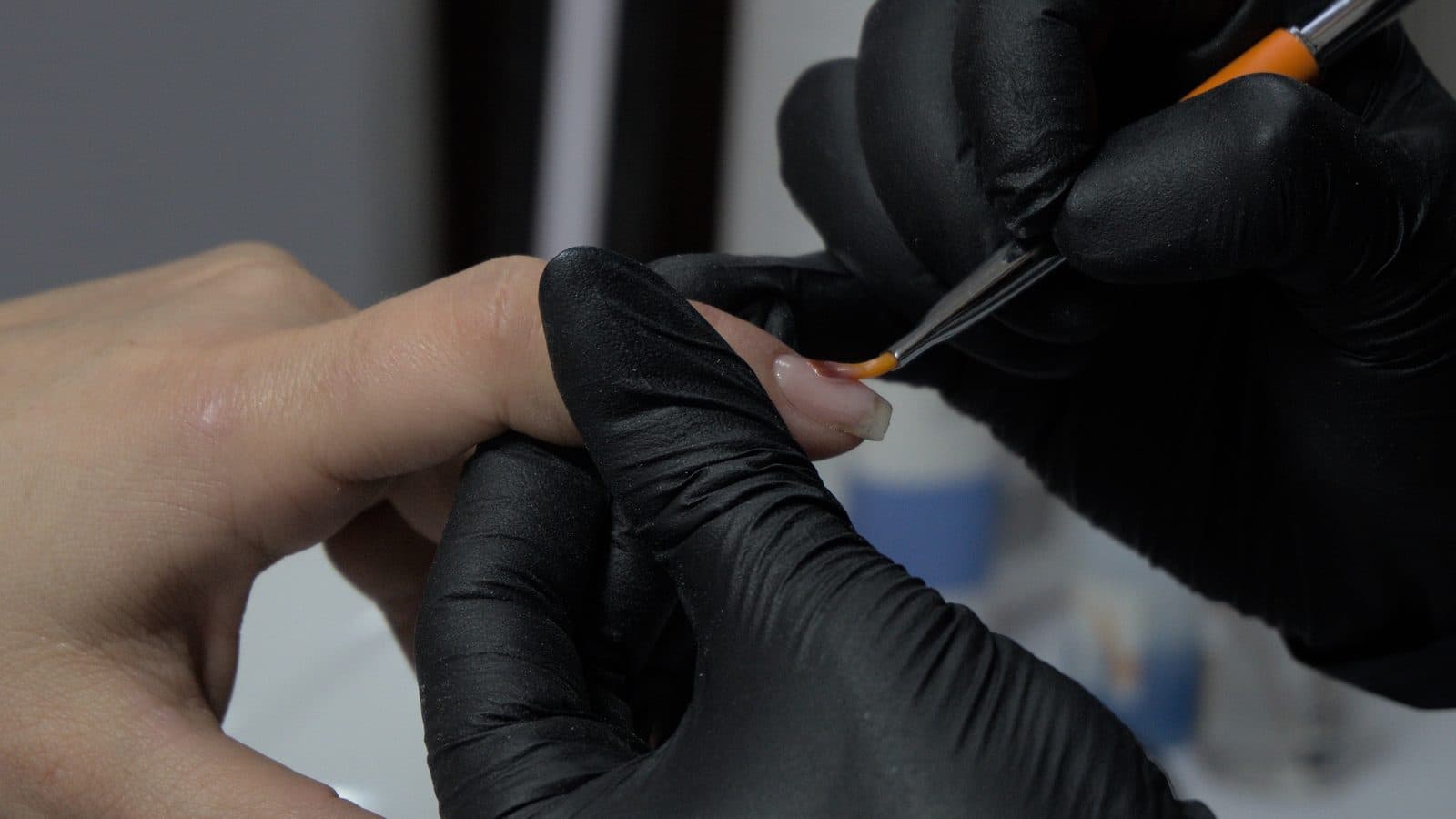
- Keep product off skin, every time. A margin at the cuticle and the sidewalls is not a finishing preference, it is the control measure.
- Clean up before you cure, not after. Once it is cured it is inert. Wiping uncured product off skin is where it spreads.
- Cure properly. Undercured product means uncured monomer sitting on the nail, and filings from it carry it further. Match the lamp to the system and stop judging cure by whether it feels hard.
- Run your extraction. Filing generates particles carrying unreacted monomer into the air you spend ten hours a day breathing.
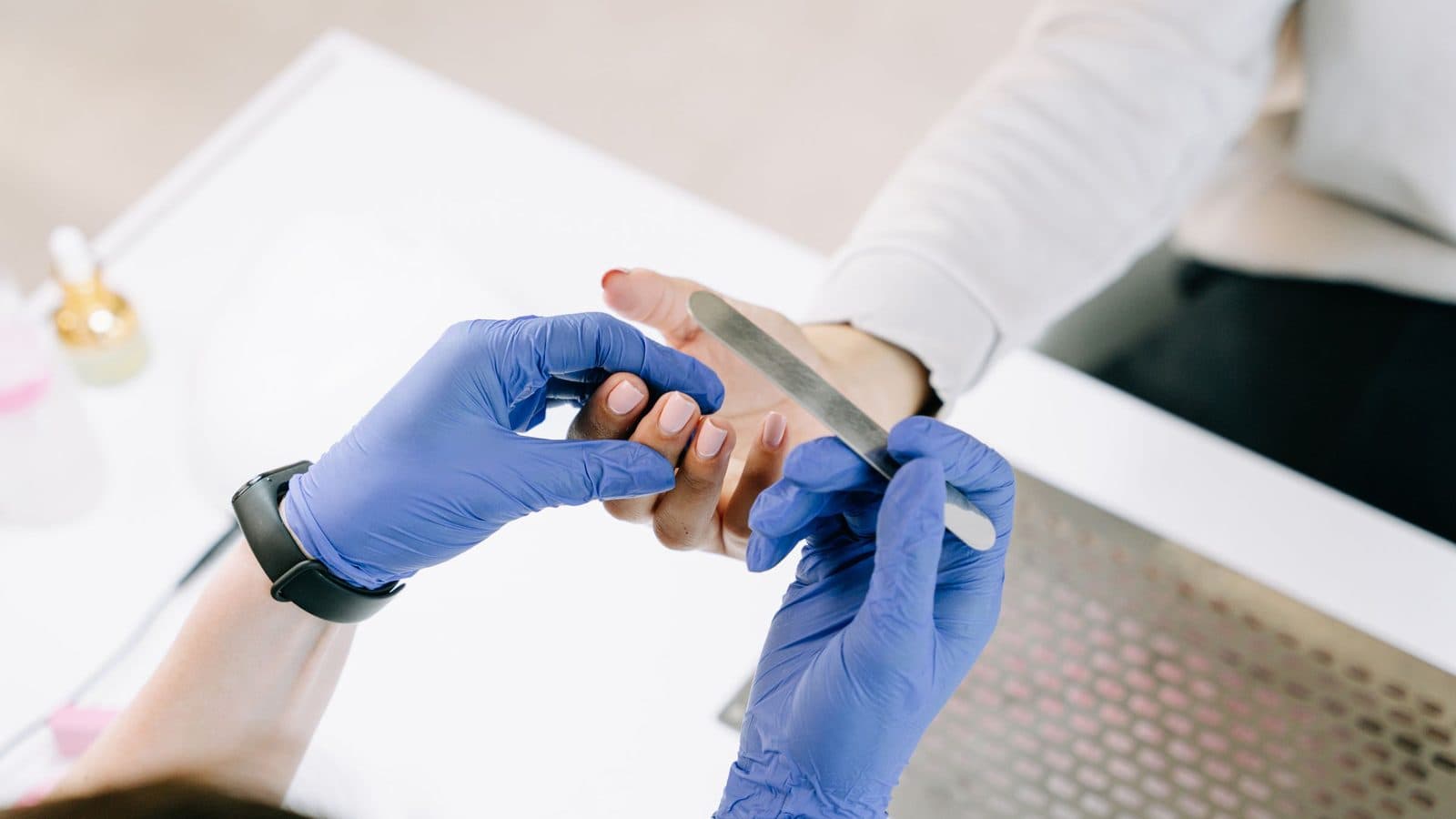
- Use nitrile gloves and change them regularly through the day. Acrylates permeate glove material over time, so a single pair worn all day is not protection.
- Do not push a client through a burn. Heat is a separate problem, but an over-filed plate and a rushed cure raise both risks at once, and heat spikes have their own causes and fixes.
Where HEMA-free genuinely helps
For a client with a confirmed HEMA sensitivity, or a technician trying to reduce cumulative exposure, choosing HEMA-free where you can is a sensible, evidence-based decision. Most of our builder gels and the full acrylic gel range are HEMA-free, as is our rubber base coat.
Not every product in every range is, and we would rather say so than blur it. HEMA-free status is listed on each individual product page, so check the product rather than the collection when it matters for a specific client.
Treat HEMA-free as useful information, not as insurance. The technicians who are still working comfortably twenty years in are the ones who keep product off skin, cure it properly, and run the extraction. The label helps. The habit is what protects you.