Why gel nails lift: diagnose it by where it failed
A client comes back on day four with one nail lifting, and you go straight to the mental list. Prep. Oil. Too thick. Lamp. It is a long list, everyone has the same one, and working through it from the top is the slowest possible way to find the answer.
There is a faster route. Lifting does not fail randomly. Where it lifted, and how it came away, narrows it to two or three causes before you have touched anything.
Read the failure first
Before you change your prep, look at what actually happened. A shell that comes away intact and clean is telling you something completely different from a chip at the tip or a crescent at the cuticle. Same word, three different problems, three different fixes.
If it fails on every client, it is your process. If it fails on one client repeatedly, it is that nail. Work out which one you are looking at before you change anything.
Lifting at the cuticle
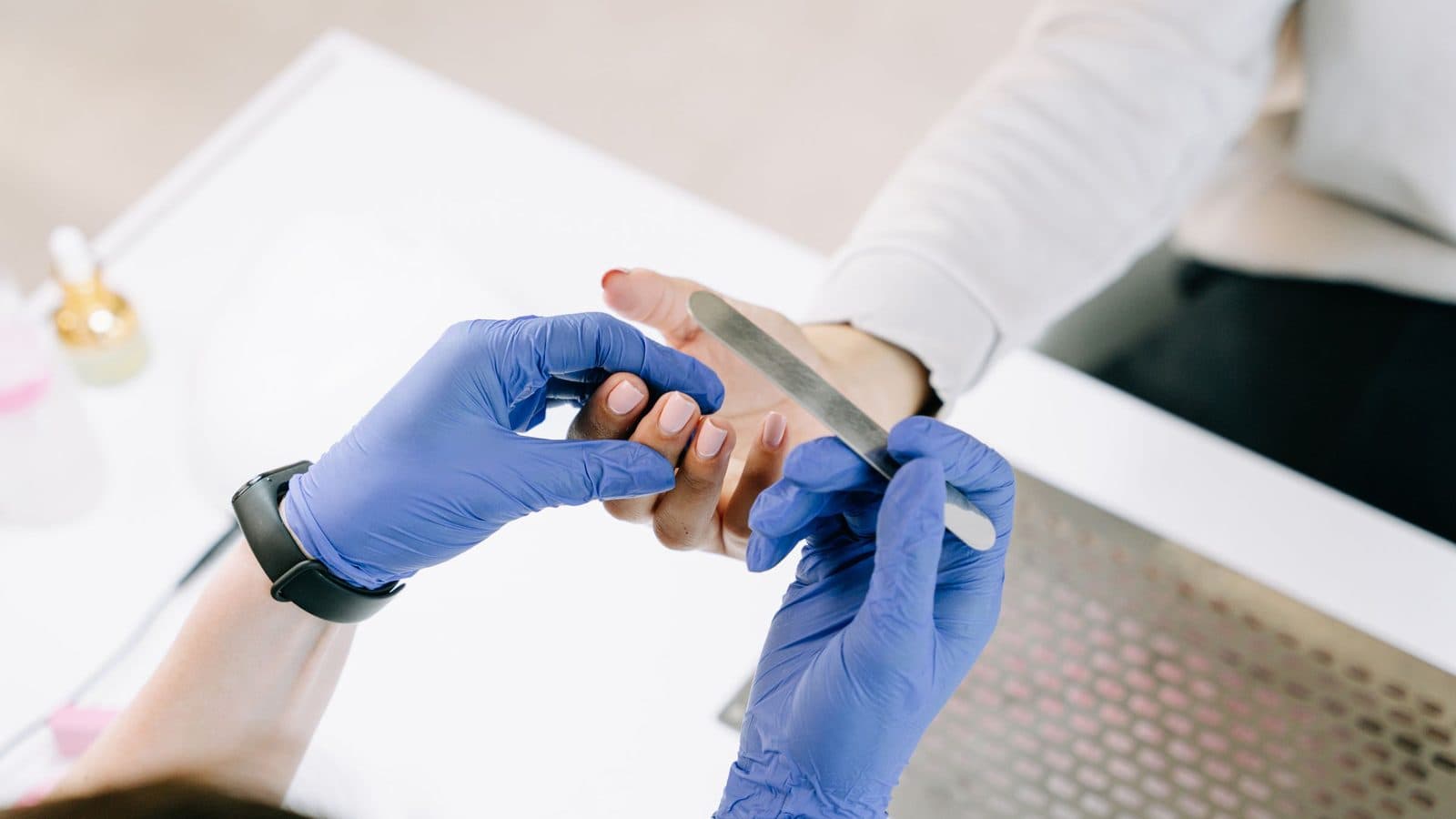
The most common one, and nearly always a prep problem rather than a product problem. The area at the base of the nail carries a translucent layer of non-living tissue that is easy to miss because it is the same colour as the plate. Gel bonds to it perfectly well. Then that tissue does what dead skin does, sheds, and takes your base coat with it.
- Non-living tissue left on the plate after pushing back. If you can see a faint difference in sheen at the base, it is still there.
- Product touching skin or flooding the sidewalls. The nail plate and the surrounding skin move independently and constantly, so anything bridging the two gets levered off, and that opens a channel for water and oil to get underneath.
- Recontamination between cleansing and base coat. If the client rests their hand on their face, or you steady the finger with a bare thumb on the plate, you have just undone the dehydration step.
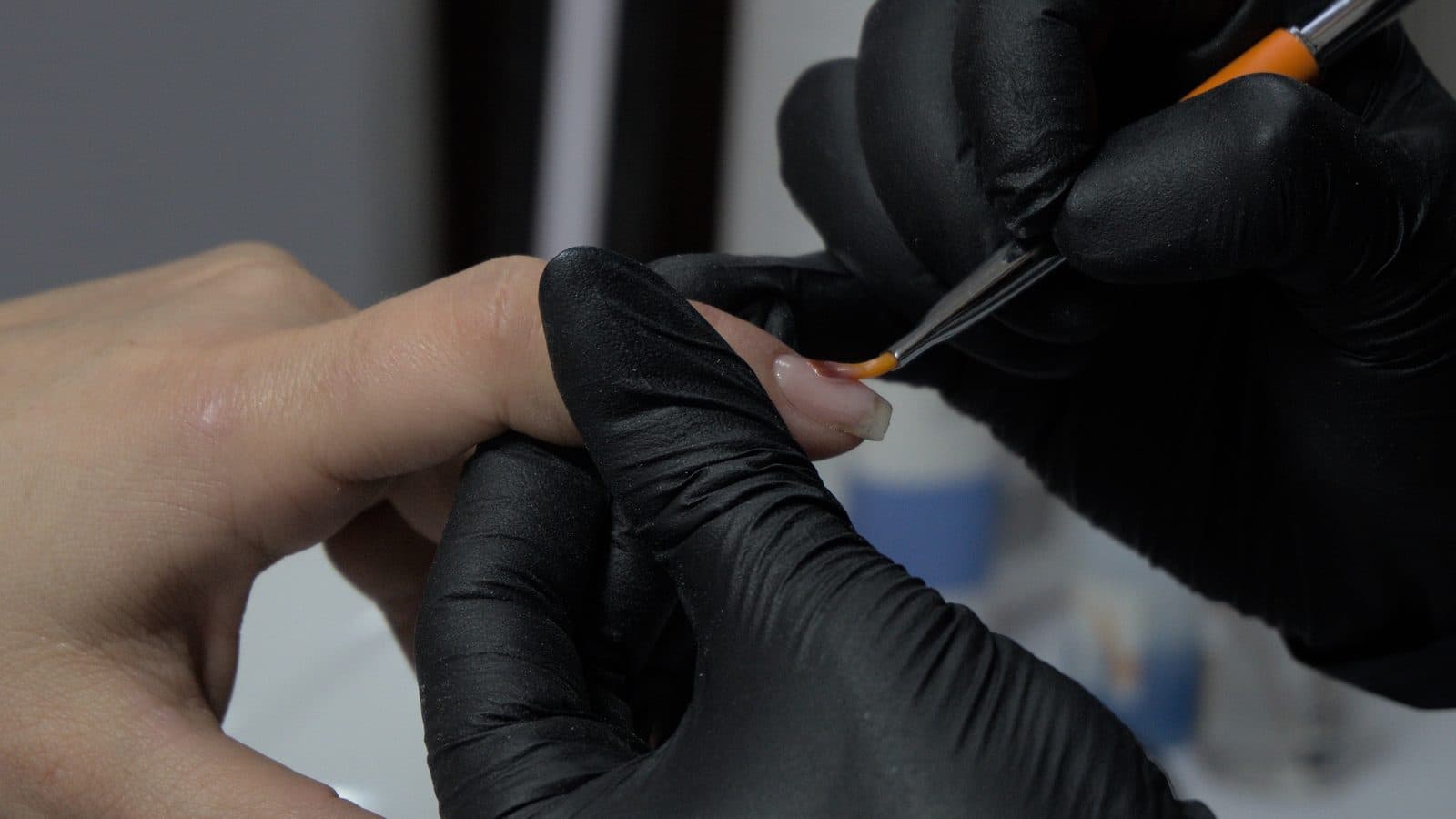
The fix is unglamorous. Remove all non-living tissue properly, cleanse each nail immediately before its base coat rather than all ten at the start, leave a visible margin at the cuticle and sidewalls, and clean up any flooding with a fine brush before you cure rather than filing it off afterwards.
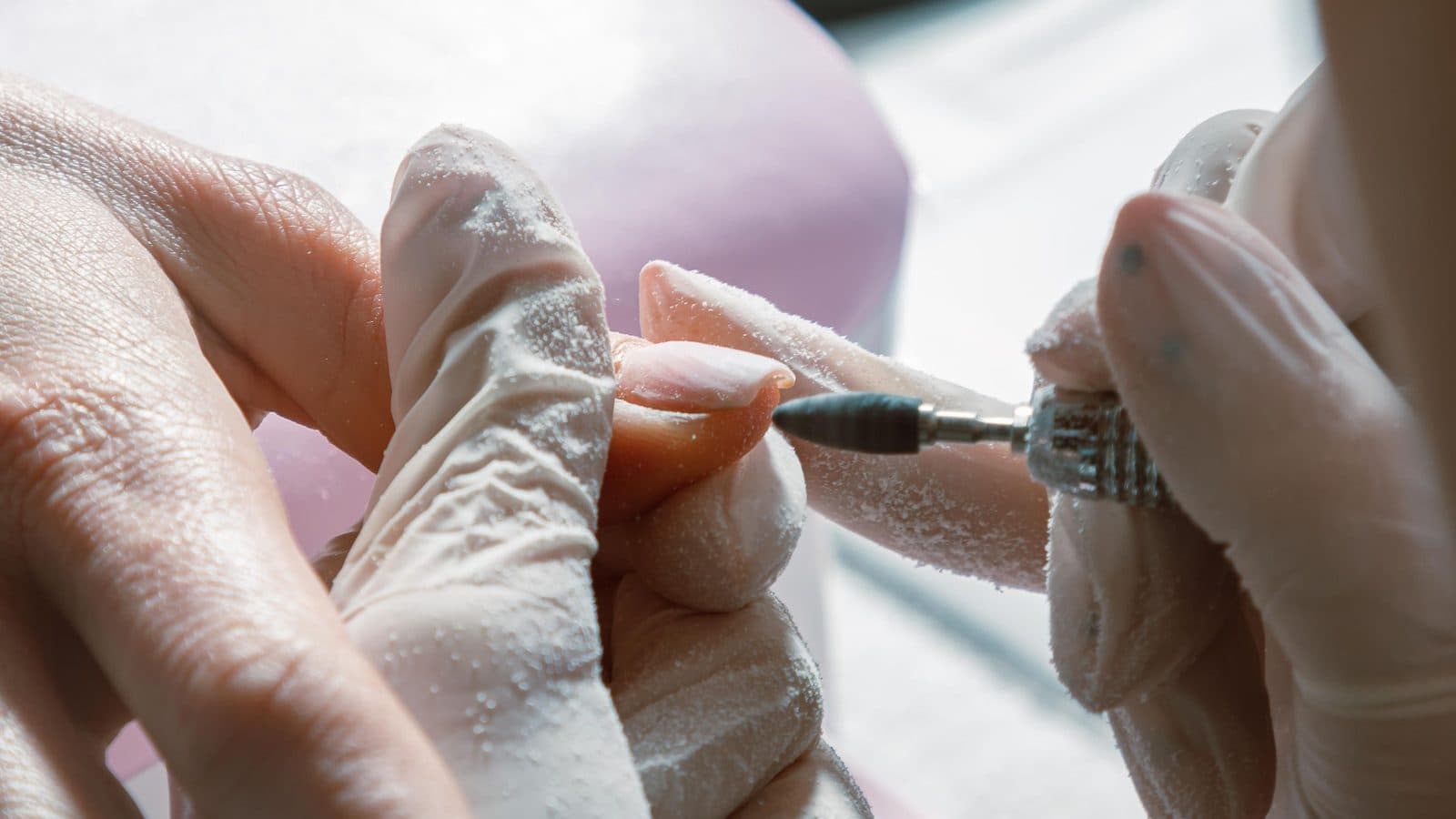
Lifting or chipping at the free edge
The free edge is unsupported and takes every impact the client's day produces. If the coating sits on top of the nail like a lid rather than wrapping around the tip, the bond gives way there first. Cap the free edge with every layer, not just the top coat: base, colour and top.
The opposite failure is just as common and looks identical at a glance. Over-capping leaves a thick bead of product hanging on the edge, that bead does not cure through, and undercured product chips. Cap thin. You are sealing the edge, not building on it.
The whole shell peels off in one piece
This one is unambiguous, which makes it the easiest to fix. The only layer touching the natural nail is the base coat. If the entire set releases cleanly and comes away intact, the base coat never bonded at all, and nothing about your colour, your top coat or your lamp is relevant to it.
Something was on the plate: oil, moisture, hand cream, or dead tissue right across the surface. Cleanse thoroughly with a lint-free pad and let it flash off properly before the base coat goes on. If it keeps happening to the same client, look at how much water their hands are in and read the next section but one.
It only lifts on one nail
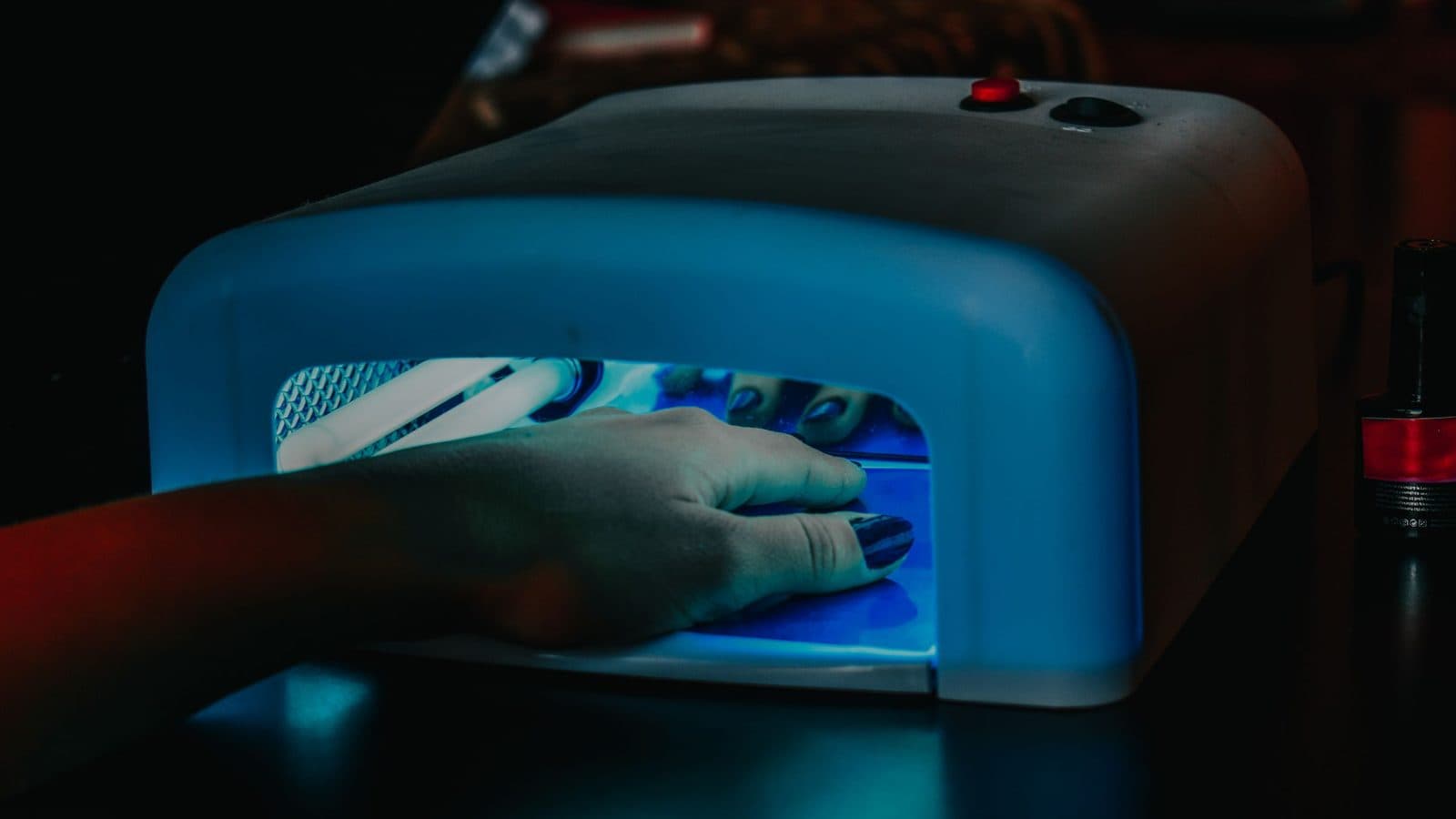
If it is the same nail every time, and especially if it is a thumb, suspect the lamp before you suspect your prep. LED lamps want the hand flat and the nail directly under the diodes, and thumbs very often sit at an angle outside the effective beam. Cure thumbs separately. If it is a different nail each time, it is more likely a moment of contamination or a bit of flooding you did not catch, so slow down on cleanup.
It only lifts on one client
Now you are looking at the nail rather than your process. Very flexible plates move more than a rigid coating can tolerate, and the bond fails under repeated flex. Hands constantly in water, or a client with genuinely sweaty hands, give you a plate that swells and changes shape through the day while the cured product does not, which puts the bond under continuous stress.
For flexible or thin plates, a flexible rubber base like Sticky AF tolerates that movement far better than a rigid base coat will, and it is worth trying before you conclude the client is a lost cause. It is also worth asking directly whether they peel their gel off between appointments, because that takes layers of the plate with it and makes every subsequent set worse.
Four things worth dropping
Some of the received wisdom in this trade is actively costing you retention.
- Nails do not need to breathe. The nail plate is not alive and gets nothing from the air. Any improvement clients notice during a break from gel comes from stopping mechanical damage, not from oxygen.
- Cuticle oil does not cause lifting on a well-applied set. A properly sealed coating does not let oil underneath, and penetrating oil keeps the natural nail more flexible. Oil on the plate at prep time absolutely does block adhesion, so the rule is oil daily at home, none at all before base coat.
- Acid primer does not eat the nail plate. It is corrosive to skin and it can yellow a coating if you flood it, both good reasons to use it sparingly, but the eats-your-nails story is not true.
- Oily nail beds get blamed for far more lifting than they cause. If it is happening across your whole client list, it is not their nails, it is your prep.
A retention checklist
- Remove all non-living tissue from the plate. Take your time here, it pays for itself.
- De-shine only if your system asks for it, and when you do, use a fine-grit buffer and one light pass. Under-buffing is recoverable. Over-buffing is not.
- Cleanse each nail immediately before its base coat, not all ten at the start, and let the solvent flash off.
- Do not touch the plate after cleansing, and do not let the client touch it either.
- Leave a margin at the cuticle and sidewalls, and clean up flooding before you cure.
- Cap the free edge thinly on every layer, and cure thumbs separately if your lamp needs it.
Retention is usually decided in the first five minutes of the appointment rather than in the product you reach for. That said, the wrong product on the wrong nail will undo good prep, so if you are unsure whether a nail wants a rubber base, a builder gel or something with more structure, we set out what actually separates the systems.